CHOOSE BEFORE YOU CONNECT
The smart home industry is overflowing with disposable gadgets designed to create vendor lock-in. Before spending capital on upgrades, step back and evaluate whether each device solves genuine everyday friction or simply introduces another battery to replace.
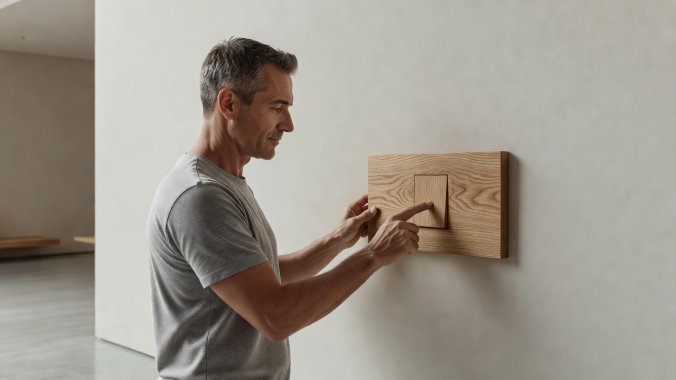
THE FOUR HARDWARE RULES
1. The Guest Test: Can your visiting grandmother or weekend babysitter walk into the guest bathroom and turn on the washroom light without installing an app or asking for Wi-Fi passwords? If the answer is no, your design has failed.
2. The Offline Test: Unplug your main broadband modem. Does the front door still unlock? Does the heating continue regulating room temperatures? Do wall dimmers still dim? Life in cold climates requires self-contained resilience.
3. The Standby Penalty: Every connected microcontroller draws standby juice. A poorly engineered Wi-Fi outlet consuming 2.2 watts 24/7 wastes nearly 20 kWh annually just staying awake. Choose ultra-low-power Zigbee or Thread radios that sip 0.15 watts.
4. The Neutral Wire Question: Many older Scandinavian wooden houses built between 1950 and 1980 lack a neutral conductor behind light switches. Verify your wall junction boxes before purchasing. Specify "no-neutral" bypass modules to prevent flickering LEDs.
CALCULATING PHANTOM LOAD RISKS
Manufacturers love praising the energy efficiency of their connected gadgets, but they rarely audit the cumulative parasitic drain of their power supplies. Look at the numbers across an average three-bedroom residence:
| Device Category | Units | Standby Draw (per unit) | Annual Energy Cost (at €0.28/kWh) |
|---|---|---|---|
| Wi-Fi Smart Plugs | 12 units | 1.80 W | €53.00 / year |
| Zigbee Micro-Relays | 12 units | 0.25 W | €7.35 / year |
| Proprietary Cloud Hubs | 4 units | 4.50 W | €44.15 / year |
| Single Thread USB Border Stick | 1 unit | 0.80 W | €1.96 / year |
RECOMMENDED STARTING PATH
If you are beginning a renovation or retrofitting an existing apartment, follow this orderly sequence:
- Audit Electrical Backboxes: Check depth (aim for 55mm deep backboxes to accommodate in-wall micro relays).
- Select a Single Protocol Backbone: Commit primarily to Zigbee 3.0 or Thread for all sensors and wall actuators.
- Retain Tactile Faceplates: Fit micro-dimmers behind authentic mechanical plates made of spun aluminium, brass, or bakelite.
- Automate Only Repetitive Drudgery: Keep automations minimal: hall lights off at midnight, bathroom towel radiators warm before work, vestibule heated for drying boots.